What the Temporary Resident Cap Could Mean After 2027

Canada’s immigration policies are constantly evolving, and one significant update for international students and skilled workers is the 5% temporary resident population cap. The IRCC temporary resident targets 2026 2027 have highlighted this change, sparking discussions on its potential impact. Understanding the temporary resident cap is crucial for students and professionals planning to study, work, or reside in Canada temporarily.
Canada Shaws offers expert guidance to help applicants navigate these changes, ensuring they understand study permit caps, work permit targets, and the effects on applicants.
This blog provides a detailed overview, practical tips, and insights to help international applicants make informed decisions about their Canadian immigration journey.
Understanding the Temporary Resident Cap
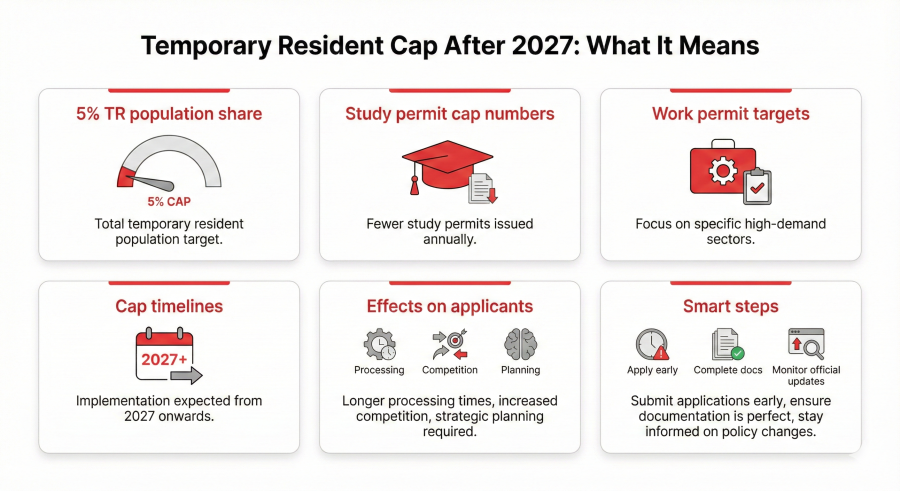
The temporary resident cap is a limit set by the Canadian government to maintain the temporary resident population at a manageable level, currently planned as a 5% temporary resident population cap. This policy is part of the Supplementary levels plan 2026–2028, aiming to balance population growth with resources like housing, healthcare, and employment opportunities.
Key aspects of the cap include:
- Study permit cap numbers: Limits on new international students admitted each year, ensuring universities can manage resources efficiently.
- Work permit targets: Controls on temporary workers entering Canada to prevent labour market saturation.
- TR population share: Ensures that temporary residents do not exceed 5% of Canada’s total population, maintaining social and economic balance.
By understanding these key components of the temporary resident cap, applicants can better anticipate upcoming changes and prepare their applications efficiently. For official details and guidance on temporary resident rules, visit the IRCC Temporary Resident Cap Page.
How the Cap Impacts International Students
The study permit cap numbers can significantly affect international students applying to Canadian colleges and universities. Students may experience longer processing times, stricter eligibility requirements, and limited program slots. Understanding these changes is crucial for proper planning.
Canada Shaws can help applicants by:
- Accurately assessing eligibility based on program and location.
- Guiding on the best time to apply to avoid peak periods.
- Assisting with document preparation and submission to improve approval chances.
Additionally, staying updated on the IRCC temporary resident targets 2026 2027 allows students to anticipate potential delays and plan finances, accommodation, and travel accordingly. Early preparation and expert guidance are key to navigating the impact of the temporary resident cap effectively.
Effects on Temporary Workers
Temporary workers entering Canada under work permits are also affected by the work permit targets. Employers may face limits on hiring foreign workers, while applicants need to ensure their employment aligns with government-approved sectors.
Key considerations include:
- Verifying job offers meet work permit targets.
- Preparing complete documentation to avoid application rejections.
- Planning application timelines according to the cap timelines to maximise approval chances.
Canada Shaws offers guidance to both applicants and employers, providing insights on labour market trends, documentation requirements, and strategies to ensure compliance with the temporary resident cap.
Planning Ahead with Canada Shaws

Canada Shaws provides personalised guidance for international students and temporary workers to navigate the 5% temporary resident population cap. Our services include:
- Expert consultation on study and work permit applications.
- Assistance with document preparation and submission.
- Timely updates on cap timelines and related immigration changes.
Practical tips include applying early, ensuring all documentation is accurate, monitoring official IRCC updates, and being aware of program-specific limits. These measures help applicants manage the effects on applicants due to new restrictions and maintain compliance with Canadian immigration rules.
Additionally, understanding the Supplementary levels plan 2026–2028 helps applicants anticipate long-term policy shifts. This foresight is particularly useful for students planning multi-year programs or workers considering multi-year contracts.
Challenges and Opportunities
While the temporary resident cap presents challenges, it also offers opportunities. Limiting the number of temporary residents helps:
- Maintain quality education and resources for international students.
- Ensure stable labour market conditions for temporary workers.
- Promote better integration of newcomers into Canadian society.
Challenges include increased competition for study permits and work opportunities, longer processing times, and stricter evaluation criteria. Opportunities arise for applicants who plan ahead, seek expert guidance, and understand program-specific requirements.
Canada Shaws advises applicants to:
- Start applications early and track deadlines.
- Prepare comprehensive documentation to avoid delays.
- Explore alternative programs or pathways if primary applications face limitat
For deeper insight into how these changes may affect your plans, we invite you to explore our Detailed Canada Study Permit Cap 2025: What Students Need to Know guide. This resource explains the policy in detail and outlines proactive strategies that can help applicants navigate opportunities effectively, even within the limits of the temporary resident cap.
Common Mistakes to Avoid
Understanding the temporary resident cap can prevent common pitfalls. Applicants should avoid:
- Submitting incomplete applications.
- Ignoring study permit cap numbers and work permit targets.
- Missing deadlines for applications.
- Not consulting expert guidance from Canada Shaws services.
Extra care points include monitoring the Supplementary levels plan 2026–2028, following official IRCC updates, and maintaining communication with educational institutions and employers. By avoiding these mistakes, applicants increase their chances of smooth processing and approval.
Conclusion
The temporary resident cap after 2027 will have significant implications for international students and temporary workers. By understanding the 5% temporary resident population cap, study permit cap numbers, and work permit targets, applicants can better prepare for Canada’s evolving immigration landscape.
Canada Shaws offers comprehensive support to navigate these changes effectively, ensuring students and workers have the best chance for approval and smooth settlement.
Early preparation, consultation, and adherence to official IRCC guidance are crucial for minimising delays and maximising approval chances. Canada Shaws provides expert advice, application support, and updates on cap timelines to help international residents achieve their goals in Canada.
You can also explore our consultation services for students and workers. Book a consultation with Canada Shaws today.
FAQs
The temporary resident cap limits the number of temporary residents to manage population growth. It ensures the temporary resident population does not exceed 5% of Canada’s total population.
Students may face stricter study permit caps, longer processing times, and enhanced eligibility and compliance checks.
Yes. Work permit targets may restrict foreign worker entries and require alignment with government-approved job sectors.
Canada Shaws provides personalized guidance on applications, document preparation, and real-time updates on cap timelines to help maximize approval chances.