Canada Immigration Trends 2026: Top Patterns You Should Know

Canada has long stood out as a global leader in welcoming newcomers, and 2026 is shaping up to be another pivotal year in the evolution of its immigration landscape. Whether you’re an international student, skilled worker, employer, or policy watcher, understanding Canada Immigration Trends for 2026 will help you navigate opportunities and challenges ahead.
Let’s explore the most important patterns you need to know from Temporary VS Permanent Shifts to labour alignment and compliance reviews.
If you’re also looking for clear answers, practical insights, and step-by-step guidance on how these changes may affect your plans, this in-depth guide covers key policies, eligibility considerations, and strategic tips to help you move forward with confidence.
Looking Ahead: Canada’s Immigration Strategy in 2026
Canada’s immigration system is entering a phase of recalibration. After several years of record-high newcomer numbers during and after the pandemic, Ottawa is steering toward a more managed, strategic intake, balancing economic needs with social infrastructure, housing, and labour market realities. At the core of this strategy is the 2026–2028 Immigration Levels Plan, which sets official government targets for both permanent residents and, for the first time, temporary residents.
This dual focus marks a clear shift in Canada’s immigration strategy. While permanent residency has traditionally been the priority, the addition of defined temporary resident targets shows a stronger effort to manage short-term migration flows, an approach that will significantly influence immigration outcomes in 2026. Staying updated on Canadian immigration trends allows both newcomers and employers to anticipate policy changes better and plan with clarity.
Permanent vs. Temporary: Understanding the Shift
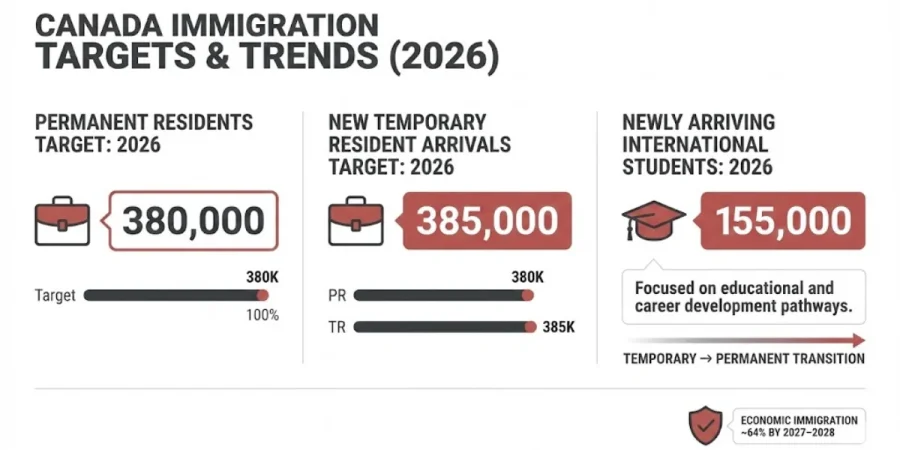
One of the biggest stories in 2026 immigration trends is the way Canada is balancing Temporary VS Permanent Shifts. Understanding these dynamics is key for anyone planning to move, work, or study in Canada.
Permanent Residency Stability and Strategic Growth
According to Canada’s official immigration level plan published by IRCC, the country is maintaining a strong commitment to permanent immigration despite recent adjustments. Canada has set a target of 380,000 new permanent residents in 2026, slightly lower than the 395,000 planned for 2025, but still a robust intake overall.
The majority of these newcomers will continue to come through economic immigration streams, including professionals, skilled workers, and individuals who already possess Canadian work experience or educational credentials, reinforcing Canada’s focus on long-term labour market integration and economic growth.
Canada’s Strategic Focus on Transitioning Temporary Residents
Instead of flooding in large numbers of newcomers from abroad, the government is increasingly focused on converting temporary residents already in Canada (like international students and workers) into permanent residents. Programs facilitating this transition are rising in prominence as Canada aligns immigration more closely with actual labour market participation and economic contribution. By keeping an eye on Canada Immigration Trends, applicants can better plan their pathways from temporary to permanent residency.
Temporary Residents Slowing Growth
Temporary resident admissions, that is, foreign workers, students, and other non-permanent visitors, are expected to dip significantly in 2026. The target for temporary resident arrivals is roughly 516,600, down from 673,650 in 2025.
This redirection in policy is both strategic and deliberate. By gradually reducing certain temporary resident inflows, Canada aims to ease growing pressures on housing, healthcare, and public services, while still addressing critical labour shortages in sectors where qualified Canadians remain in short supply. These shifts reflect a more selective and outcome-driven approach to temporary programs, designed to support long-term integration and workforce alignment.
By closely following Canada Immigration Trends, applicants can better anticipate how temporary programs are evolving and make informed decisions that align with Canada’s long-term economic and population planning goals.
By tracking Temporary VS Permanent Shifts, newcomers can anticipate whether their pathway will likely be short-term or transition into permanent residency, a critical insight for career and life planning in Canada.
Emerging Patterns: Who’s Coming and Why It Matters
Now that we’ve unpacked the overall targets, let’s look at the patterns emerging among different groups of newcomers.
International Students: A Course Correction
International students have been a cornerstone of Canada’s temporary migration growth in recent years. But 2026 is earmarked for a serious recalibration. Government plans suggest up to half the intake of new international students compared with recent levels, signaling tighter control and more selective criteria.
This is a big deal because student permits often translate into future skilled talent, those who finish programs, then join the workforce and transition to permanent residency. So, this “course correction” reflects a shift toward quality over quantity, consistent with the latest Canada Immigration Trends. It also aligns immigration more closely with labour demands rather than unlimited flows.
Temporary Worker Landscapes
Temporary foreign workers, especially in sectors like agriculture and caregiving, remain crucial to the Canadian economy. But the government is tightening eligibility and setting new expectations around wages and labour impact assessments. These changes are partly aimed at protecting domestic workers and addressing labour market imbalances.
Compliance review immigration really comes into play here. Employers must ensure they meet evolving regulations, from wage thresholds to documentation requirements, or risk penalties, a theme that will only grow in 2026 and beyond. Following Canada Immigration Trends helps employers and applicants stay ahead of these requirements. Understanding Temporary VS Permanent Shifts also helps workers know whether they are on a temporary or permanent path.
Canada’s Labour Alignment Goals
A major driving force behind Canada’s immigration trends is labour alignment, matching newcomers to areas of genuine skill demand.
Canada is dealing with an aging population and persistent skills gaps in key sectors like technology, healthcare, and skilled trades. Immigration, whether temporary or permanent, is increasingly seen as part of the solution. Programs like Express Entry, Canadian Experience Class (CEC), and Provincial Nominee Programs (PNPs) are structured to prioritize candidates with skills that align with labour market needs.
Recently observed trends in CEC Express Entry draws show stable point-cut scores and a consistent focus on people who already work in Canada, an expression of the two-stage strategy where temporary residents transition to permanent residency based on labour experience. Keeping up with Canada Immigration Trends ensures newcomers understand where the best opportunities lie.
Policy and Compliance: What’s Changing?

With all these shifts, compliance review immigration is increasingly important. Canada’s immigration authorities, particularly IRCC, have been tightening rules around documentation, eligibility, and employer responsibilities, especially in temporary worker streams.
Whether it’s ensuring proof of funds for study permits, meeting wage criteria for work permits, or reporting requirements for employers, staying compliant isn’t just good practice; it’s essential for avoiding delays, refusals, or sanctions. Monitoring Canada Immigration Trends gives newcomers a strategic advantage in anticipating policy updates and procedural changes.
What This Means for You
So, what do all these trends really mean?
- For international students: There may be greater scrutiny and more competitive entry requirements, but successful graduates with in-demand skills remain well-positioned for work and permanent residency.
- For skilled workers: More pathways are tied to labour market alignment — experience in Canada, language skills, and sector relevance will matter.
- For employers: Labour alignment trends and compliance reviews mean reclaiming responsibility for ensuring job offers, wages, and documentation meet updated criteria.
- For communities: Tighter temporary flows might ease pressures on housing and services, but the strategy still prioritizes economic growth and demographic balance.
By understanding Canada Immigration Trends and Temporary VS Permanent Shifts, all stakeholders, newcomers, employers, and policy watchers can make more informed decisions in 2026.
How Shaw Services Supports These Immigration Trends
Canada Shaw’s Services plays a key role in helping immigrants successfully navigate Canada’s evolving 2026 immigration landscape by offering tailored support and practical resources that align with national priorities.
Key Ways Shaw’s Services Add Value:
- Settlement & Integration Guidance: Provides newcomers with essential information on adapting to life in Canada, including community orientation and settlement planning.
- Credential & Licensing Assistance: Helps immigrants understand and navigate processes for recognizing foreign qualifications, a critical step for employment in regulated professions.
- Language Support Referrals: Connects clients with language training and resources to improve English or French skills, boosting employability and community engagement.
- Employment Pathway Support: Offers coaching, job-market insights, and strategies to align skills with Canada’s labour needs, especially in sectors highlighted in the 2026 plan.
- Ongoing Client Support: Ensures personalized follow-up and advice throughout the immigration journey, helping individuals adapt to policy changes and maximize their prospects.
Need help? Book a consultation with Canada Shaws and get expert support
Looking Ahead
As we move deeper into 2026, the theme is clear: Canada is fine-tuning its immigration system. It’s less about sheer numbers and more about strategic integration, adaptability, and long-term economic alignment.
Whether you’re planning your immigration path or making decisions about workforce planning or education, staying updated on Canada Immigration Trends will ensure you are prepared for the evolving landscape.
FAQs
Canada is focusing on a strategic intake of a balance of permanent and temporary residents. Labour alignment and compliance review are shaping policy priorities.
Temporary VS Permanent shifts refer to the growing focus on converting temporary residents into permanent ones while managing short-term migrant flows.
Programs like Express Entry, Canadian Experience Class, and Provincial Nominee Programs prioritize candidates with skills that match Canada’s workforce needs.
Applicants and employers must meet documentation, wage, and reporting standards to avoid delays, refusals, or penalties under IRCC regulations.