Regional Immigration Programs: How Local Opportunities Are Growing

Canada’s immigration story is evolving. While major cities like Toronto, Vancouver, and Montreal have long attracted newcomers, a quieter yet powerful shift is underway across smaller cities, towns, and rural regions. Regional Immigration Programs are opening new doors both for immigrants seeking opportunity and for communities eager to grow, innovate, and thrive.
From community-led pilots to employer-driven streams, local areas are increasingly shaping how immigration works on the ground.
If you’re also looking for clear answers on how these programs work, who they’re designed for, and where the real opportunities exist, this guide walks you through the key pathways, benefits, and practical considerations to help you navigate regional immigration with confidence.
Let’s explore how these programs function, why they’re expanding, and what they mean for immigrants, employers, and communities across the country.
What Are Regional Immigration Programs?
Regional Immigration Programs are immigration pathways designed to attract newcomers to specific provinces, territories, or communities rather than concentrating settlement in large urban centers. These programs address local labor shortages, population decline, and economic needs directly.
Unlike traditional federal programs, which prioritize national objectives, regional pathways empower local governments, employers, and community organizations to play a central role in selecting newcomers. This localized approach ensures immigration aligns directly with real workforce needs and community settlement capacity.
For those interested in understanding compliance and best practices for regional immigration pathways, our guide on Verify an EB-5 Regional Center’s Compliance Record provides valuable insights that complement these processes.
Why Regional Immigration Programs Are Growing

Across Canada, many regions face similar challenges: aging populations, shrinking workforces, and difficulty attracting skilled talent. Rural Settlement in Canada has become a national priority as smaller communities work to sustain essential services, businesses, and economic activity.
At the same time, newcomers are discovering that regional areas often offer:
- Better job accessibility
- Lower housing costs
- Stronger community connections
- Faster integration into the workforce
This mutual benefit is why local economic immigration strategies are gaining momentum nationwide.
Types of Regional Immigration Programs
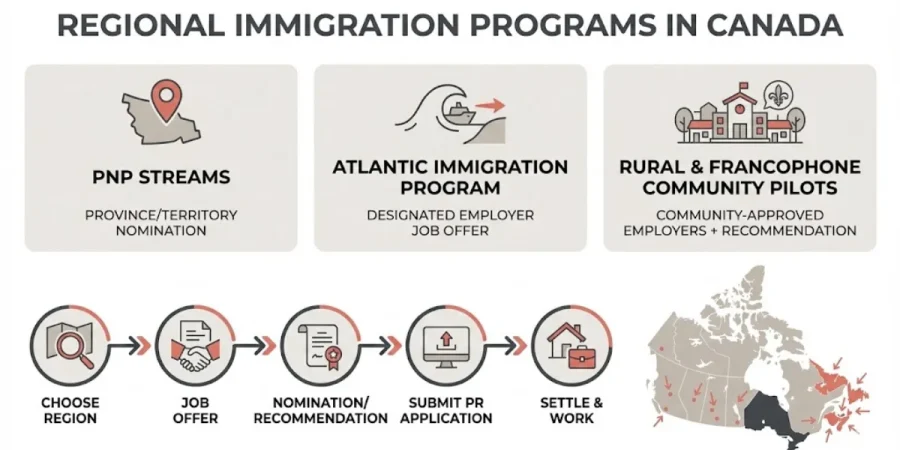
Regional Immigration Programs include provincial streams, community-driven pilots, and employer-supported pathways that address local labor and settlement needs.
Provincial and Territorial Nominee Programs (PNPs)
Provincial and Territorial Nominee Programs remain the backbone of regional immigration. Each province and territory operates its own streams to target workers, graduates, and entrepreneurs who match local economic needs.
These programs allow provinces to nominate candidates for permanent residence based on:
- Occupation demand
- Work experience
- Language skills
- Local job offers
PNPs play a central role in driving Regional Immigration Programs, particularly in provinces with thriving industries beyond the major cities. To explore a detailed, step‑by‑step guide on how the Provincial Nominee Program (PNP) supports skilled workers and strengthens local economies, see our article on Provincial Nominee Program (PNP): Powerful Canadian Pathways.
Community Immigration Pilots
Community Immigration Pilots take localization a step further by empowering individual communities to select newcomers. Programs such as the Rural and Northern Immigration Pilot (RNIP) and the Atlantic Immigration Program are prime examples.
These pilots focus on:
- Smaller towns and rural regions
- Strong community-employer partnerships
- Long-term settlement and retention
The community-led model helps newcomers feel supported from day one, increasing their chances of staying and building a future locally. For a detailed view of how community-based regional pathways work and what labour market opportunities they offer in smaller provinces and towns, check our blog on the Rural Community Immigration Pilot Canada for deeper insight.
Local Economic Immigration Streams
Local Economic Immigration streams are employer-driven pathways designed to address immediate workforce shortages. Employers play a central role by:
- Identifying labor gaps
- Offering genuine job opportunities
- Supporting settlement and integration
For immigrants, these streams often provide clearer employment outcomes and faster entry into the labor market, particularly in sectors such as healthcare, manufacturing, agriculture, and skilled trades.
Benefits of Regional Immigration Programs
Regional Immigration Programs create win-win opportunities by connecting skilled immigrants with communities facing labor shortages and population decline. They support local economic growth while offering newcomers better access to jobs, affordability, and long-term settlement stability.
Benefits for Communities
For local regions, immigration brings more than just workers; it brings renewal. Regional Immigration Programs help communities:
- Stabilize population decline
- Support local businesses
- Sustain schools, healthcare, and public services
- Encourage economic diversification
In many cases, newcomers become long-term residents, business owners, and community leaders.
Benefits for Immigrants
For immigrants, regional pathways offer real advantages:
- Less competition for jobs compared to big cities
- Lower cost of living
- Faster access to employers
- A more personal settlement experience
Many newcomers find that rural settlement in Canada provides a better quality of life and a stronger sense of belonging.
Benefits for Employers
Employers in regional areas often struggle to recruit and retain talent. These programs help businesses:
- Fill persistent labor gaps
- Reduce employee turnover
- Build a stable, long-term workforce
With immigration aligned to local needs, employers become active partners in economic growth.
Challenges and Considerations
While the benefits are clear, regional immigration is not without challenges. Smaller communities must ensure:
- Adequate housing availability
- Access to settlement and language services
- Employer readiness to support newcomers
- Social and cultural integration support
Addressing these factors is essential to ensure Community Immigration Pilots and other regional programs remain sustainable and successful.
Success Stories from Regional Canada
Across the country, success stories highlight the power of localized immigration. Communities that once faced declining populations are now seeing renewed economic activity, school enrollment growth, and business expansion.
Newcomers who settle through Regional Immigration Programs often report higher job satisfaction, stronger community ties, and long-term plans to stay, proving that smaller regions can be places of opportunity, not compromise.
How Regional Immigration Programs Work
For official eligibility criteria, application steps, and program updates, applicants should refer to guidance from the Rural Community Immigration Pilot by IRCC. While requirements vary by program, the process generally includes regional or employer support followed by a permanent residence application.
While each program has unique requirements, the general process includes:
- Identifying a regional or community-based pathway
- Securing a qualifying job offer (in many cases)
- Meeting language, experience, and education criteria
- Receiving community or provincial support
- Applying for permanent residence through federal channels
Community partners, employers, and local governments all play active roles throughout the process.
Comparing Major Regional Immigration Options
| Program Type | Target Area | Employer Role | Settlement Support |
| PNPs | Provincial/Regional | Moderate | Strong |
| Community Immigration Pilots | Rural & Small Communities | High | Community-Based |
| Local Economic Streams | Employer-Specific | Central | Varies |
This diversity allows immigrants to choose pathways that best match their career goals and lifestyle preferences.
The Future of Regional Immigration in Canada
Looking ahead, Regional Immigration Programs are expected to expand rather than slow down. As Canada continues to balance population growth, housing pressures, and labor needs, regional pathways offer a practical, targeted solution.
More communities are likely to participate in Community Immigration Pilots, and Local Economic Immigration models will continue evolving to meet changing workforce demands. For immigrants willing to explore beyond major cities, the opportunities are only growing.
Canada Shaws Immigration Services for Regional Pathways
Navigating Regional Immigration Programs can be complex, especially when each community and province has its own requirements. Canada Shaws offers tailored immigration support to help applicants, employers, and communities make the most of regional pathways.
- Guidance for Provincial Nominee Programs aligned with regional labor needs
- Support for Community Immigration Pilots and community-driven pathways
- Employer-led immigration solutions under local economic programs
- Strategic advice for rural and regional settlement in Canada
- Personalized eligibility assessments for Regional Immigration Programs
- End-to-end application preparation and compliance support
- Assistance for employers and communities participating in regional initiatives
If you need personalized support, our experienced immigration consultants at Canada Shaws are ready to assist you every step of the way.
Final Thoughts
Regional immigration is reshaping Canada’s settlement landscape one community at a time. By aligning immigration with local needs, these programs create win-win outcomes for newcomers, employers, and communities alike.
Whether you’re a skilled worker seeking opportunity or a community looking to grow, Regional Immigration Programs are proving that Canada’s future isn’t just urban, it’s local, inclusive, and full of potential.
FAQs
Regional Immigration Programs are immigration pathways designed to attract newcomers to specific provinces, towns, or rural areas to meet local labor and economic needs.
Community Immigration Pilots allow local communities to recommend immigrants based on job offers and settlement potential, ensuring newcomers are well-supported and more likely to stay long term.
Rural settlement is ideal for immigrants seeking stable employment, lower living costs, and a stronger sense of community while contributing directly to local economic growth.
Local Economic Immigration helps employers fill labor shortages while giving immigrants faster access to jobs, community support, and long-term settlement opportunities.