How to Start Your Canada Work Permit Application: A Step-by-Step Guide

Starting your Canada work Permit application can feel overwhelming at first. Between job offers, employer documents, and IRCC requirements, many applicants aren’t sure where to begin. The good news? Once you understand the Work Visa Steps and how the Canada job Visa process works, the entire journey becomes much clearer.
Whether you’re a skilled professional, a temporary worker, or someone exploring international opportunities, this guide breaks everything down in a simple, practical way without the confusing government language.
And if you’re also looking for clear answers to common questions, this guide covers everything from eligibility and documentation to employer support and approval tips, all in one place.
What Is a Canadian Work Permit?
A Canadian work permit is an official authorization that allows foreign nationals to work legally in Canada for a specific period. Unlike a visa, which only allows you to enter the country, a work permit grants the legal right to work once you arrive. Most foreign workers need to apply for a work permit before starting employment, and you can find all the official eligibility rules and step-by-step guidance directly on the IRCC work permit page.
Most applicants will need to complete a Canada work Permit application before starting employment, unless they fall under a specific exemption. Understanding this distinction early helps you avoid costly mistakes during the Canadian job Visa process.
Types of Canada Work Permits You Should Know
Before applying, it’s essential to know which type of work permit fits your situation.
Employer-Specific Work Permit
This is the most common option. It ties you to:
- One employer
- One job role
- One location
Your application heavily depends on Canadian Employer Support, including proper job offers and compliance documents.
Open Work Permit
An open work permit allows you to work for almost any employer in Canada. It’s usually available to:
- Spouses of skilled workers or students
- International graduates
- Certain permanent residence applicants
Not everyone qualifies, which is why understanding the Work Visa Steps upfront is so important. For a detailed explanation of different work permit types, how employer support and LMIA work, you can check out this helpful guide: How to Get a Work Permit in Canada in 2025 .
Eligibility Requirements for a Canada Work Permit
To qualify for a Canada work Permit application, you must meet several basic requirements:
- Proof that you will leave Canada when your permit expires
- Sufficient funds to support yourself
- A clean criminal record
- Good health (medical exams may apply)
- Proof that your job offer is genuine
One of the most overlooked work permit tips is ensuring your job offer aligns with IRCC requirements. Even strong applicants face refusal when employer documents are incomplete or inconsistent. While most applicants need a valid job offer, there have been temporary policies in the past that allowed visitors to apply for a work permit without leaving Canada. You can read more about this policy and its recent changes in the guide on converting a visitor visa to a work permit.
Step-by-Step Canada Work Permit Application Process
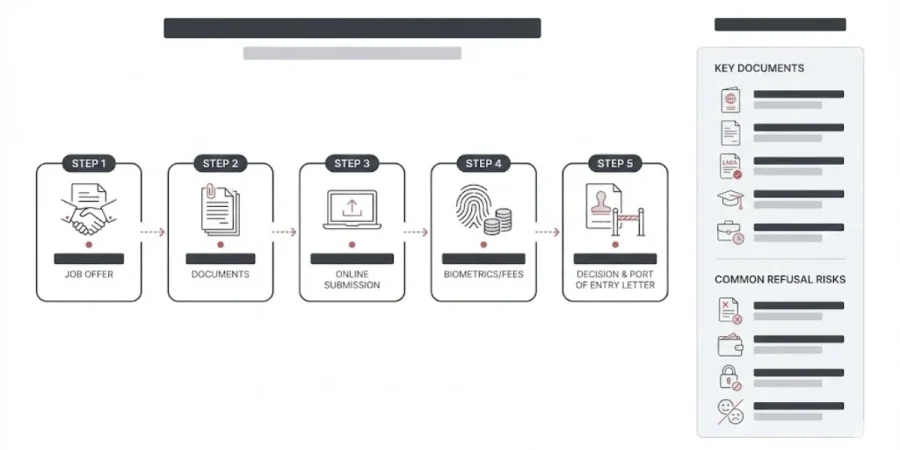
Following these Work Visa Steps carefully can significantly improve your chances of approval.
Step 1: Secure a Valid Job Offer
Most applicants need a written job offer from a Canadian employer. In many cases, the employer must obtain a Labour Market Impact Assessment (LMIA) or qualify for an LMIA exemption. Strong Canadian Employer Support plays a major role here.
Step 2: Gather Required Documents
Typical documents include:
- Passport
- Job offer letter
- LMIA or exemption code
- Educational and work experience proof
Missing documents are one of the top reasons a Canadian work Permit application gets delayed.
Step 3: Apply Online Through IRCC
You’ll create an IRCC account and submit your application online. Biometrics are required for most applicants, so plan accordingly.
Step 4: Pay Fees and Submit
Fees usually include:
- Work permit processing fee
- Biometrics fee
Always double-check payment receipts. This is a simple but crucial work permit tip.
Step 5: Wait for a Decision and Prepare for Entry
Once approved, you’ll receive a Port of Entry Letter of Introduction. Your actual work permit is issued when you arrive in Canada.
The Role of Canadian Employer Support
Many applicants underestimate how important employer compliance is. Canadian employers must meet strict IRCC standards, including:
- Submitting accurate job details
- Paying compliance fees when required
- Following employment laws after approval
Strong Canadian Employer Support reduces the risk of refusals and delays, especially for employer-specific permits.
Processing Times and What Affects Them
Processing times for a Canadian work Permit application vary depending on:
- Your country of residence
- Type of work permit
- Application completeness
Delays often happen due to missing documents, medical exams, or employer verification. One of the best work permit tips is to apply early and monitor your IRCC account regularly.
Common Reasons Canada Work Permit Applications Are Refused

Understanding refusals helps you avoid them. Common issues include:
- Weak proof of temporary intent
- Inconsistent job offer details
- Employer non-compliance
- Incomplete application forms
Even small errors can affect the Canadian job Visa process, so accuracy matters.
Work Permit Tips to Increase Approval Chances
Here are some practical, experience-based work permit tips:
- Ensure employer documents match your application exactly
- Write a clear explanation letter if needed
- Follow IRCC document formatting rules
- Avoid last-minute submissions
Using these tips consistently strengthens your Canada work Permit application.
What Happens After You Get Your Work Permit?
Once you arrive in Canada:
- You’ll receive your physical work permit at the port of entry
- Apply for a Social Insurance Number (SIN)
- Start working under the conditions listed on your permit
Many workers later transition from temporary status to permanent residence, making the work permit a valuable long-term opportunity.
When Should You Seek Professional Help?
You may benefit from professional guidance if:
- Your employer requires an LMIA
- You’ve had a previous refusal
- Your case involves complex work histories
Proper guidance ensures your Work Visa Steps are handled correctly from the start.
Canada Shaws: Trusted Guidance for Your Work Permit Journey
We, as a professional team, can provide support in multiple cases like:
- Provides personalized guidance for every stage of the Canadian work Permit application
- Assesses eligibility and explains the correct Work Visa Steps based on your profile
- Assists with employer-specific requirements and Canadian Employer Support documentation
- Reviews applications to ensure alignment with IRCC rules and compliance standards
- Helps identify and reduce risks that could delay or affect the Canadian job Visa process
- Offers ongoing support from initial assessment through submission
Navigating the Canada work permit process can be complex, but with a Book a Free Canada Immigration Consultation for a Work Permit, you can clarify every step, avoid common mistakes, and improve your chances of approval.
Final Thoughts
Starting a Canada work Permit application doesn’t have to be stressful. With the right preparation, strong Canadian Employer Support, and a clear understanding of the Work Visa Steps, you can navigate the Canada job Visa process with confidence.
Taking the time to apply correctly today can open doors to professional growth and potentially a future in Canada.
FAQs
Processing times vary depending on your country of residence, the type of work permit, and whether biometrics or medical exams are required. On average, applications can take anywhere from a few weeks to several months. Applying early and submitting complete documents can help avoid delays in the Canadian job visa process.
In most cases, yes. A valid job offer from a Canadian employer is required, especially for employer-specific permits. However, some applicants may qualify for an open work permit, which does not require a job offer. Understanding the work visa steps helps determine which option applies to you.
Canadian employers play a critical role by providing job offers, LMIA documents (if required), and compliance information. Strong Canadian employer support improves application credibility and reduces the risk of refusal.
Yes. Many temporary foreign workers later transition to permanent residence through programs like Express Entry or Provincial Nominee Programs. A well-prepared Canada work permit application can be an important first step toward long-term settlement.