CRS Points for Foreign Work Experience: A Complete Express Entry Guide

The Comprehensive Ranking System (CRS) is used within the Express Entry system to determine the rank of candidates in order to provide them with permanent Canadian residency. It is based on different factors, including language test scores, CRS points for foreign work experience, or work experience outside Canada, and other factors that determine your CRS score, which helps you get selected from a pool of candidates. The higher the CRS score, the higher the chances of you getting selected.
In this blog, we will guide you about the CRS scores, CRS points for foreign work experience compared with domestic and LMIA-based experience, and how Canada Shaws can help you in the process.
What is the Comprehensive Ranking System?
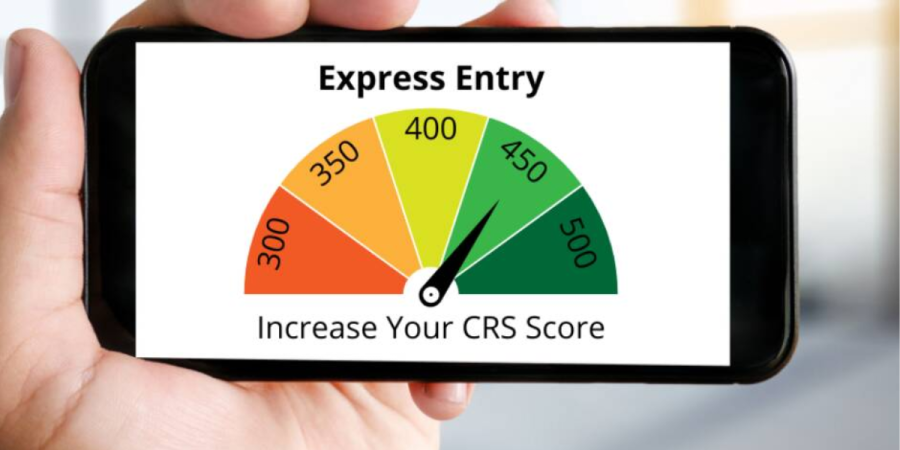
CRS is a point-based system that the Canadian government uses to assess the candidate’s profile, score it, and check its rank in the Express Entry pool, especially how CRS points for foreign work experience can contribute to that. These Express Entry work experience points help determine how competitive a candidate is within the pool.
CRS Points for Foreign Work Experience
Understanding how CRS points for work experience outside Canada are calculated can help candidates prepare for Express Entry in a more organized way.
Skill Transferability Factors
For education, the maximum points you get are 50, and if:
- If you are proficient in official languages and have a post-secondary degree, you get 50 points
- If you have Canadian work experience along with a post-secondary degree, you get 50 points
Understanding how these Express Entry work experience points are awarded helps you in creating a strong profile.
For foreign work experience, the CRS score, maximum points are 50 as well, and if:
- If you have CLB level 7 or higher with foreign work experience, you get 50 points
- You have Canadian as well as foreign work experience, and you get 50 points
If you have strong language proficiency and a certificate of qualification, you get 50 on 50 CRS points for overseas work experience, express entry, and these are also further broken down based on different factors.
Labour Market Impact Assessment (LMIA)
This is a document that a Canadian employer may need before hiring a foreign (non-Canadian) worker. A positive LMIA, also called a confirmation letter, shows that no worker in Canada is available to do the job; hence, there is a need for a foreign worker to fill the job position. The employer has to apply for the LMIA, and then the worker can apply for a work permit, and for that, the worker needs:
- Job offer letter
- Contact
- LMIA number
- Copy of LMIA
Candidates with a valid LMIA job offer could receive an extra 50 to 200 CRS points. However, IRCC has now officially removed the extra CRS points. Candidates with a valid LMIA-based job offer will not receive extra CRS points for foreign work experience.
Common Mistakes to avoid for CRS points for Foreign Work Experience

Here are some of the common mistakes that you can fix that people make during their Express Entry profile, which can significantly impact your CRS score:
- Not claiming all eligible points is one factor, such as points for a sibling in Canada, CRS points for foreign work experience, or second language proficiency. To avoid this, double-check your eligible points or consult the Canada Shaws experts to get professional help.
- Using estimated language scores is a big risk. Always take an official language test before creating your profile.
- Outdated or missing proof of funds is another problem. Check the latest required amounts on the IRCC website for correct information.
- Choosing an incorrect National Occupation Classification (NOC) code can lead to entry refusal, so make sure to check that it aligns with your work experience.
- Overlooking your spouse’s points can lead to inaccurate CRS points, so make sure to include all relevant information for your partner.
- An inconsistent work history for the Express Entry profile can be a big question mark. A clear and consistent timeline helps solve the issue and maximizes your CRS points for foreign work experience.
- Not including the Education Credential Assessment (ECA) reduces your points. Therefore, make sure your ECA is completed by a recognized agency.
- Not updating your profile means losing out on points, so ensure to update it with new information.
- Waiting too long to apply can put your chances. It is advisable to enter the Express Entry pool as soon as you are eligible.
Conclusion
The Express Entry into Canada uses CRS points to evaluate and assess the candidate’s eligibility. High CRS points for foreign work experience can significantly boost your CRS score. While Canadian (domestic) work experience and high language proficiency can boost your CRS score, foreign work experience CRS score on the other hand, especially when combined with a strong language score or Canadian work experience, helps you get the maximum score. However, LMIA-based jobs can no longer contribute to providing extra CRS points, but they remain important for securing work permits.
Moreover, avoiding common mistakes such as inaccurate work history for the Express Entry profile can help in increasing your chances of getting a higher CRS score, resulting in more successful overseas work experience in Express Entry. To ensure your profile is accurate and you are calculating your CRS points accurately, especially with foreign work experience, take help from our experts. Start your journey with Canada Shaws’ skilled consultants by filling out the consultation form today!