Deepfake Scams Canada: Using Technology Safely During Your Immigration Process

International students and newcomers in Canada are increasingly exposed to deepfake scams during their immigration process. These scams use advanced AI technology to create realistic but fake messages, emails, documents, or even voice calls that appear to come from government authorities. One typical example is AI scams Canada, where scammers impersonate immigration officers or IRCC representatives to steal personal information or demand money. Understanding these threats is crucial to safeguarding your identity, maintaining your immigration status, and avoiding unnecessary delays.
Canada Shaws provides guidance and resources to help you navigate digital risks safely and confidently while ensuring compliance with official rules (Source: IRCC advanced analytics). This article explores common deepfake immigration scams, practical steps for AI safety newcomers Canada, and how to recognize online disinformation, including insights from CSIS deepfakes reports.
What Are Deepfake Scams and How Do They Affect Newcomers
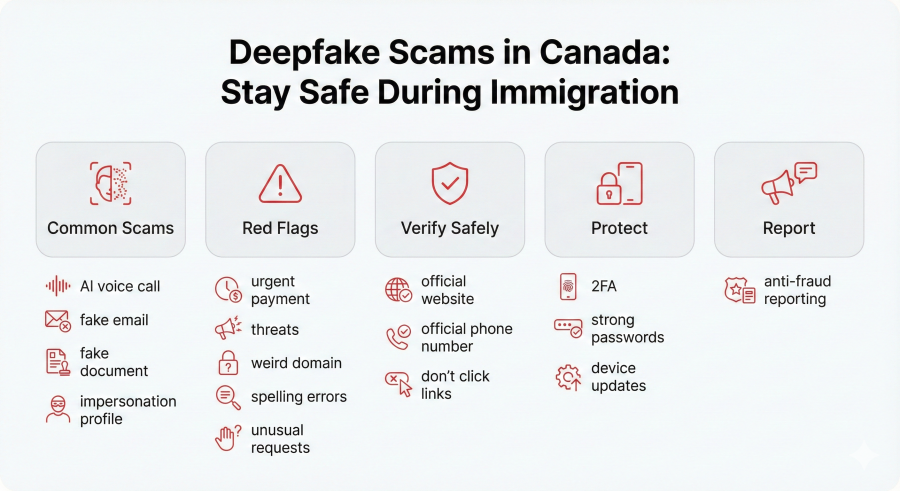
Deepfake scams involve using AI to manipulate videos, images, or audio recordings, making them appear authentic. Scammers exploit this technology to create compelling content that can trick newcomers into providing sensitive personal information or making financial transactions. Some standard methods include:
- AI-generated voice messages claiming urgent action is required.
- Fake official documents designed to look like IRCC forms or notices.
- Social media impersonation, where scammers pose as immigration consultants or government officials.
These scams, including deepfake immigration scams, are particularly risky for international students, who rely heavily on timely updates for study permits, visas, or work authorizations. According to CSIS deepfakes, impersonation scams targeting newcomers have increased significantly in recent years (Canadian Anti-Fraud Centre advisory). Students unfamiliar with Canadian digital safety practices are especially vulnerable.
Types of AI Scams Canada
AI-driven fraud schemes are increasing nationwide, targeting newcomers with fake immigration help, deepfake calls, and deceptive online services.
AI Voice Scams Canada
AI voice scams Canada involve fraudsters using deepfake technology to mimic government officials. They often call or leave voice messages demanding personal information, payment, or immediate action. To stay safe:
- Do not provide personal information over unsolicited calls.
- Verify the source by contacting IRCC directly (Source: IRCC advanced analytics).
- Listen for inconsistencies in tone, accent, or speech patterns, as AI-generated voices may sound slightly unnatural.
Deepfake Immigration Scams
These scams are usually delivered via email or fake documents. Scammers use official-looking logos and forms to deceive students. To protect yourself:
- Download forms only from the official IRCC website.
- Check sender emails carefully; legitimate IRCC emails will have proper domains.
- Report suspicious messages to the Canadian Anti-Fraud Centre immediately.
By recognizing these scams, newcomers can avoid losing sensitive information or making costly mistakes.
Practical Tips for AI Safety Newcomers Canada
Canada Shaws emphasizes proactive strategies to safeguard against online disinformation for Canada newcomers. These include:
- Verify Official Sources: Always cross-check immigration information on the IRCC website.
- Use Two-Factor Authentication: Protect your email and IRCC account with multi-step verification.
- Educate Yourself on Common Scams: Learn to identify impersonation scams, deepfake scams, and AI voice scams Canada.
- Secure Your Devices: Keep computers, phones, and other devices updated and install reliable antivirus software.
- Avoid Sharing Sensitive Data: Never send personal details through social media, messaging apps, or unverified emails.
Incorporating these digital safety habits into daily routines ensures students stay protected while navigating Canadian immigration processes.
Additional Threats and Online Disinformation for Canada Newcomers
According to the official guidance provided on the IRCC website, newcomers should rely only on verified updates to avoid falling for online disinformation designed to create confusion or manipulate their immigration decisions. Examples include:
- Fake updates about study permit changes or caps.
- Bogus financial assistance offers require upfront payments.
- False announcements about Canadian work programs or visa renewals.
To stay safe:
- Rely only on verified sources like IRCC and Canada Shaws’ guidance.
- Cross-check any information received on social media or unofficial websites.
- Report suspicious content to prevent others from falling victim to scams.
Being informed about these threats helps newcomers maintain compliance and reduces stress during immigration processes.
Common Mistakes Newcomers Make

- Trusting Unknown Contacts: Responding to calls or emails without verification.
- Ignoring Red Flags: Overlooking spelling mistakes, urgent payment requests, or inconsistent details.
- Downloading Unverified Documents: Risking malware, ransomware, or phishing attacks.
- Not Reporting Suspicious Activity: Failing to inform authorities reduces the chance of preventing widespread scams.
Avoiding these mistakes is vital for maintaining digital safety and avoiding complications during your immigration journey.
How Canada Shaws Helps Newcomers
As outlined in the resources provided on Canada Shaws, international students can access essential guidance to navigate the Canadian immigration process safely and stay informed with reliable updates.
- Understanding official IRCC procedures, including study permits, work authorizations, and document requirements.
- Alerts about emerging AI threats, such as AI voice scams Canada and deepfake scams.
- Practical advice for online safety, including password security, two-factor authentication, and identifying impersonation scams.
- Resource guidance, linking students to official IRCC pages for updates and accurate information.
To get personalized guidance and stay protected from digital fraud, newcomers can book a free consultation through Canada Shaws at Book a consultation with Canada Shaws and get expert support.
Conclusion
Protecting yourself against deepfake scams is critical for a smooth immigration experience. Awareness, careful verification, and safe digital habits are your strongest defenses. Canada Shaws helps newcomers by guiding AI safety newcomers Canada, helping you stay informed, secure, and confident. By recognizing impersonation scams, following digital safety tips, and relying on verified sources, international students can safeguard personal information and maintain a successful immigration journey.
FAQs
A deepfake scam uses AI-generated audio, video, or images to impersonate officials and trick you into sharing personal information.
Look for unusual requests, verify the caller through official IRCC channels, and note unnatural speech patterns.
Report it to the Canadian Anti-Fraud Centre and avoid providing personal information to suspicious contacts.
Yes, international students and newcomers may not be familiar with local digital safety rules, so verification and awareness are essential.