How EB-5 Investment Amounts Have Changed in 2025
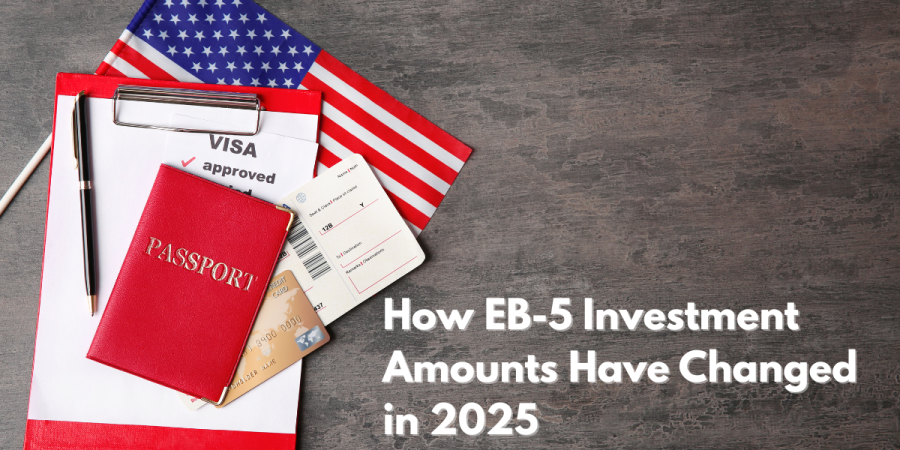
The EB-5 Visa program is a great option for people from other countries who want to live in the U.S forever by investing money. In 2025, the EB-5 investment amounts doesn’t change much, but it’s important to understand how to invest and what you need to do.
This article will explain the current EB-5 visa minimum investment, show how it compares to older rules, and go over different ways to invest, like EB-5 direct investment, regional center projects, or projects in a rural or urban Targeted Employment Area. We’ll also talk about why the program is helpful and how the EB-5 Reform and Integrity Act changes things for investors.
This Visa gives you a clear way to get U.S residency while knowing the EB visa cost and EB-5 return on investment can help you figure out if it’s a good choice. Whether you pick a direct investment or a regional center, this guide will make it easy to understand.
Without further delay, let’s jump into the details of the EB-5 investment amounts program and what it offers.
Policy Overview: Understanding the EB-5 Visa Program
The EB-5 Visa is a program started by Congress in 1990 to help the U.S economy with money from other countries. By putting money into U.S businesses, people from different countries and their families, including the husband, wife, and kids under age 21, can get a Green Card. To do this, they need to meet the EB-5 investment amount rules and create at least 10 full-time jobs for U.S workers.
If you want to have information about Start-up Visa, review Start-Up Visas in 2025: 10 Countries Supporting Entrepreneurs.
Investment Requirements for 2025
In April 2025, the Web 5 visa cost is $1,050,000 for projects not in a Targeted Employment Area [TEA] and $800,000 for projects in a TEA, which are places with lots of unemployed people or rural areas. The EB 5 visa minimum investment hasn’t changed this year. It’s the same as before.
This steady EB-5 investment amounts make it clear for people who want to apply. Even though the EB-5 visa minimum investment hasn’t gone up or down in 2025, the EB-5 Visa program is still a great way to live in the U.S forever.
If you’re exploring investment-based immigration, it’s also worth considering Canada’s business immigration program through the Start-Up Visa.
For more details on how the EB-5 program works and what you need to do, get help from an expert immigration consultant.
Investment Amount Differences: Direct Investment vs Regional Center Projects
Direct Investment
The most obvious feature that differentiates direct investment from other types is that a person or a company is actually engaged in the industry activities at the front end and is physically there working actively. This involvement may include managerial responsibilities or decision-making that directly affects the business.
- Investment Amount for Direct Investment
The EB-5 visa minimum investment required for most investors is $1,050,000 for non-TEA projects and $800,000 for projects located in TEAs. - Job Creation
Direct investments require investors to prove that their funds will be used to create at least 10 full-time jobs for U.S workers. This can be a more hands-on approach for entrepreneurs.
Those seeking more control over EB-5 investment amounts, like in direct EB-5 investment, may find Canada’s self-employed immigration stream beneficial.
Regional Center Projects
Regional centers are organizations approved by USCIS that manage EB-5 investment amounts projects by pooling investments from multiple investors. These projects can span various industries, such as real estate development, infrastructure, or manufacturing. Regional centers handle the day-to-day management of the projects, and investors typically do not need to take an active role.
- Investment Amount for Regional Center Projects
Like direct investments, the required investment for regional center projects is the same as others, which is $1,050,000 for non-TEA projects and $800,000 for TEA projects. - Job Creation
Regional center investments are often structured to create indirect jobs, which means that the jobs created by the investment do not have to be directly created by the investor’s actions. This offers more flexibility in how job creation is reported and documented.
Both types of investments have their advantage. However, the choice between direct investment and regional center projects often depends on the investor’s interest in being actively involved in the business versus preferring a more hands-off approach.
For a comparison of the benefits of direct investments versus regional center projects, visit the EB-5 visa guides for investors.

Impact Of Rural vs Urban Projects on Investment Amounts
Another critical distinction in the EB-5 visa program is the difference between rural and urban investments. The location of the project plays a crucial role in determining the investment amount. As previously mentioned, Targeted Employment Areas [TEAs] are defined as areas with high unemployment or those located in rural regions.
Rural Projects
Let’s look at rural projects first. These are in areas outside of big cities, as defined by USCIS. Since they are in a Targeted Employment Area, they qualify for a lower EB-5 visa minimum investment of $800,000. Rural areas often face economic struggles, so they need more investment to create jobs and improve things like schools and roads.
Benefits of Rural Projects
- Cheaper Investment
With only $800,000 needed, rural projects are more affordable for people joining the EB-5 visa program. - Government Support
On top of that, rural projects sometimes come with tax breaks or special funds to help the area grow, which can lead to a stronger EB-5 return on investment.
Urban Projects
Now, let’s shift to urban projects. These are in cities and usually don’t qualify for the lower $800,000 investment. Instead, you’ll need to invest $1,050,000. Cities typically have stronger economies and lower unemployment compared to rural areas, so the EB 5 visa cost is higher.
Challenges of Urban Projects
- Tough Competition
Since cities are busy with lots of businesses, EB-5 projects face more competition, which can make success harder. - Higher Expenses
Also, things like land and business costs are pricier in cities, which can add more risk to your investment.
Choosing Your Path
In the end, deciding between rural and urban projects comes down to what you want. Think about your goals, how much risk you are comfortable with, and what kind of community you want to support. Rural projects offer lower costs and extra benefits, while urban projects are in bustling areas with bigger economies. Weigh your options and pick what feels right for you.

Comparison with Old Policies: What Has Changed and What Has Stayed the Same?
While the EB-5 investment amount has remained steady in 2025, several other aspects of the program have seen changes over the years. Here, we will compare the old policies with the current ones and discuss how things have evolved.
-
No Reinvestment Requirement
In the past, some investors were required to reinvest their capital after the initial investment. However, as of the recent EB-5 reform and integrity act, the program no longer mandates reinvestment after the initial investment has been made. This offers greater flexibility for investors who want to exit after fulfilling their investment requirements.
-
No Backlog
Previously, certain countries, particularly China, faced significant backlogs in processing EB-5 visa applications. This led to extended waiting times for applicants.
In 2025, the EB-5 investment amounts program has improved by addressing backlogs for many countries, although some countries still experience longer wait times due to high demand.
-
Concurrent Filing
Another big change in the EB-5 investment amounts program is that investors can now send multiple forms like the I-526 and I-485. This speeds up the process and cuts down on waiting time for applications.
To learn more about how the EB-5 program has evolved, explore the EB5 Investment Visa Guides You to Permanent United States Residency.
Advantages of the New EB-5 Policies: What’s in it for Investors?
Although the EB-5 investment amount has not changed, there are still numerous advantages that come with the new policies and the program overall. Let’s explore some of these benefits.
-
Combo Card
One of the most notable advantages of the EB-5 program is the combo card, which allows investors and their families to work and travel freely. At the same time, their Green Card application is being processed. Furthermore, this card is a valuable benefit, especially for those who need flexibility during the immigration process.
-
Faster Processing
In 2025, the EB-5 program is faster than before. Investors can now file their applications at the same time, which shortens the waiting period quite a bit. This quicker process helps you move through the EB-5 visa steps more smoothly and with less delay.
-
Domestic Processing
Investors who are already living in the U.S can apply for the EB-5 visa without leaving the country. There’s no need to travel back to their home country for consular processing. This makes the application process much simpler, less stressful, and more convenient for those already in the U.S.
-
Permanent Residency
By investing money into a qualifying EB-5 project, investors can secure permanent U.S residency. This isn’t just for them but also for their spouse and children under 21 years old. It’s a major advantage for families looking to build a new life in the U.S with long-term stability.
Like the EB-5 concurrent filing advantage, Canada also publishes its processing times for business immigration, helping applicants plan accordingly.

How Can Canada Shaws Help?
The EB-5 visa process can be frustrating. At Canada Shaws, we have over 10 years of experience helping investors and families succeed with U.S. immigration programs. From choosing the right project to submitting your application, we’re with you every step of the way. Here’s why you should choose us:
- We help you understand investment options.
- Our expert team guides you on TEA vs. non-TEA projects.
- We assist with the application process and collecting the right documents.
- We are committed to connecting you with reliable EB-5 projects.
For more information, fill out this professional immigration consultation form.
Conclusion
The EB-5 investment amount has not changed in 2025, maintaining the threshold of $1,050,000 for non-TEA projects and $800,000 for TEA projects. This stability is important for investors who are considering applying under the EB-5 program.
Despite the consistency in investment amounts, the program is giving benefits that are still of great value, such as the ability to file a petition for a Green Card, faster processing, and the option to choose between direct investment and regional center projects.
Furthermore, investors should carefully consider the location for their investment as rural projects are the ones that accept the minimum investment and more incentives. The situation in urban projects would have reached a saturation point, making them more expensive to invest in and highly competitive.
For those eager to begin the EB-5 process, Canada Shaws Consulting offers expert support. Their team helps you understand and manage the complex EB-5 visa application process, ensuring a smoother experience.
In summary, the EB-5 program in 2025 remains a solid path to U.S residency with clear investment options and valuable benefits. Book a free consultation with experts to learn more about immigration complexities and their solutions.
FAQs
What is the minimum EB-5 investment amount in 2025?
The minimum EB-5 investment amount in 2025 is $1,050,000 for projects outside Targeted Employment Areas (TEAs). For projects in a targeted Employment Area, it’s $800,000.
What are the differences between direct investment and regional center projects?
An eb 5 direct investment means you run a U.S business yourself. Regional center projects combine money from many investors, and the center manages everything. Both need the same investment amounts, but they differ in how much you are involved and how jobs are counted.
Can I invest in a rural area to reduce my EB-5 investment amount?
Yes, investments in rural areas qualify for the reduced investment amount of $800k, compared to the standard $1050k for urban investments.
What advantages come with the EB-5 program?
The EB-5 program gives you a combo card to work and travel in the U.S while waiting for your Green Card. It also has faster processing with same-time filings and offers permanent residency for you, your spouse, and kids under 21.