Quebec Immigration Suspensions: What Applicants Must Know

Quebec’s immigration system is going through a period of major adjustment, and for many applicants, the changes feel sudden and confusing. From program pauses to longer processing times, Quebec Immigration Suspensions are reshaping how skilled workers, international graduates, and families plan their future in the province. If you’re planning to immigrate to Quebec or already have an application in progress, it’s essential to understand how these Quebec Immigration Suspensions may affect your pathway.
If you’re also looking for clear answers, this guide is designed to help. It covers the reasons behind the current suspensions, which programs are impacted, expected timelines, and practical steps you can take to stay prepared during this transition period.
This article explains what’s happening, why these pauses exist, and how applicants can respond strategically during this evolving phase of Quebec’s immigration system.
Understanding Quebec’s Immigration System
If you’re looking for detailed guidance on navigating these program pauses and delays, you can read our 2025 2027 Immigration Levels Plan: Big Changes for Canada for practical tips and strategies. Unlike other provinces, Quebec operates its own immigration selection process. While the federal government grants permanent residence, Quebec selects candidates through the Certificat de sélection du Québec (CSQ). This extra step allows the province to prioritize language skills, workforce needs, and integration capacity, making it essential for applicants to understand both provincial and federal requirements.
However, this autonomy also means Quebec can pause or restructure programs when needed. Many of the current Quebec Immigration Suspensions stem from policy realignments aimed at managing intake levels and ensuring long-term sustainability, though for applicants, this often results in uncertainty and longer wait times.
PEQ Pause in Quebec: What Happened?

One of the most significant developments tied to recent Quebec Immigration Suspensions is the pause and closure of the Programme de l’expérience québécoise (PEQ). For years, PEQ was a trusted route to permanent residence for international graduates and temporary foreign workers already living in Quebec.
Given these changes, professional guidance can make a big difference. Our Ethics in Immigration Consulting: How Reputable Firms Support Clients breaks down alternative pathways and strategies during the PEQ pause and PSTQ selection process, helping candidates navigate the evolving landscape. With PEQ no longer accepting new applications, many must rethink their plans, while those who submitted applications before the pause are still being processed. This PEQ pause in Quebec has created a noticeable gap, particularly for international students who had expected a smooth transition from study to permanent residence.
PSTQ 2026: Quebec’s New Skilled Worker Pathway
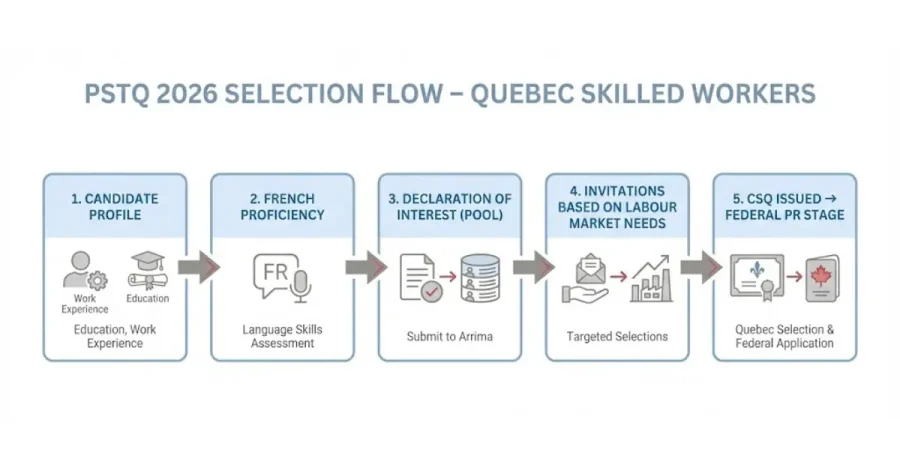
As PEQ closes, Quebec is shifting toward the Programme de sélection des travailleurs qualifiés (PSTQ). This new system is expected to become the primary economic immigration pathway, making PSTQ 2026 a key focus for future applicants navigating Quebec Immigration Suspensions.
The PSTQ operates through a declaration of interest system, where candidates are selected based on labor market needs, French proficiency, education, and work experience. Unlike the PEQ, this approach is more selective, prioritizing quality and alignment over speed. Applicants can also stay informed about federal requirements and processing updates on IRCC’s official processing times page.
Applicants preparing for PSTQ 2026 should begin strengthening their profiles early, particularly by improving French language skills and gaining experience in in-demand occupations.
Quebec CSQ Delays and Processing Challenges
Another major impact of Quebec Immigration Suspensions is the rise in Quebec CSQ delays. Program closures, intake caps, and system restructuring have created backlogs at the provincial level.
These delays don’t just affect CSQ approval; they also slow down the federal permanent residence stage. As a result, applicants may experience extended timelines even after meeting all eligibility requirements.
Understanding that these delays are systemic, not personal, can help applicants manage expectations while focusing on submitting strong, complete applications.
Family Sponsorship Pauses in Quebec
Family reunification has also been affected by Quebec Immigration Suspensions. Quebec has temporarily paused certain family sponsorship categories to manage annual intake limits.
These family sponsorship pauses mainly impact sponsorships for spouses, common-law partners, and adult dependent children. Some exceptions remain, such as minor children and specific humanitarian cases, but many families now face longer separation periods.
While these pauses are difficult, they are designed as temporary measures rather than permanent closures.
Other Immigration Program Adjustments
Beyond PEQ and family sponsorship, Quebec has introduced broader immigration adjustments, including tighter intake controls and increased emphasis on French-language integration. These changes collectively reinforce the province’s long-term immigration vision and explain why Quebec Immigration Suspensions have become more common across multiple pathways.
How Applicants Can Adapt
If you’re affected by Quebec Immigration Suspensions, flexibility and preparation are key.
- International graduates should explore PSTQ and alternative economic pathways.
- Skilled workers should prepare early for PSTQ 2026 by improving competitiveness.
- Families should monitor reopening timelines and plan submissions carefully.
Professional guidance can help applicants explore viable options and minimize unnecessary delays during this transitional period.
What to Expect in 2026 and Beyond
Looking ahead, Quebec’s immigration system is expected to remain selective but more structured. While Quebec Immigration Suspensions may continue in certain categories, programs like PSTQ 2026 are designed to offer clearer selection criteria and long-term planning stability.
Applicants who align their profiles with Quebec’s evolving priorities will be better positioned when new invitation rounds open.
How Canada Shaws Supports Applicants During Quebec Immigration Suspensions
Navigating Quebec Immigration Suspensions can be overwhelming, especially with evolving programs like the PEQ pause and ongoing PSTQ and CSQ delays. Canada Shaws provides strategic, up-to-date guidance to help applicants understand how these changes affect their eligibility and long-term plans. Rather than relying on guesswork, applicants receive tailored advice based on current Quebec immigration policies, helping them make informed decisions and stay prepared for future pathways as the system stabilizes.
Canada Shaws offers support through
- Personalized assessments to identify the best alternatives during PEQ and PSTQ pauses
- Clear explanations of CSQ delays and how they impact federal processing timelines
- Strategic planning for skilled workers, graduates, and families affected by program suspensions
- Ongoing updates and guidance aligned with Quebec’s changing immigration policies
- Professional application support to reduce risks of delays or refusals
Final Thoughts
There’s no doubt that recent Quebec immigration changes have reshaped the pathway for many applicants. From PEQ suspensions to CSQ delays and family sponsorship intake limits, the system is clearly in a period of recalibration.
With informed planning, patience, and the right strategy, applicants can navigate these changes effectively and stay prepared for future opportunities. If you need personalized support, the experienced immigration consultants at Canada Shaws are ready to assist you at every stage.
FAQs
Quebec Immigration Suspensions refer to temporary pauses or closures of certain immigration programs due to intake limits, policy changes, or system restructuring by Quebec authorities.
Yes, the PEQ pause in Quebec means that no new applications are being accepted, and the program is being phased out; however, previously submitted applications continue to be processed.
PSTQ 2026 will become Quebec’s main skilled worker pathway, focusing on French proficiency, labor market needs, and a declaration of interest system.
Due to family sponsorship pauses, Quebec has temporarily stopped accepting some family sponsorship applications, with limited exemptions, such as minor children.